



A good USB capacity guide can save you money, prevent storage headaches, and help you choose a USB flash drive that actually suits your needs. Many people assume bigger is always better, then end up paying for storage space they never use.
Others pick a low-capacity USB drive and run out of room after a few presentations, videos, or important documents.
Capacity matters, but so does the type of files you plan to store. This guide explains common flash drive capacities, shows how much data each size can hold, and helps Australian businesses choose the right promotional USB solution for every budget and purpose.
Best Promotional USB Drives By Capacity
If you're looking for a promotional USB flash drive that balances storage, branding potential, and practicality, these three options cover most business requirements.
|
Product |
Best Capacity Range |
Best For |
|
USB Swivel Drive |
8GB–32GB |
Trade shows, conferences, mass giveaways |
|
NFC USB Flash Drive |
32GB–128GB |
Client presentations, onboarding, premium campaigns |
|
Eco Paper USB Drives |
16GB–128GB |
Sustainable branding, corporate gifts, eco-conscious businesses |
USB Capacity Guide: Flash Drive Sizes Explained
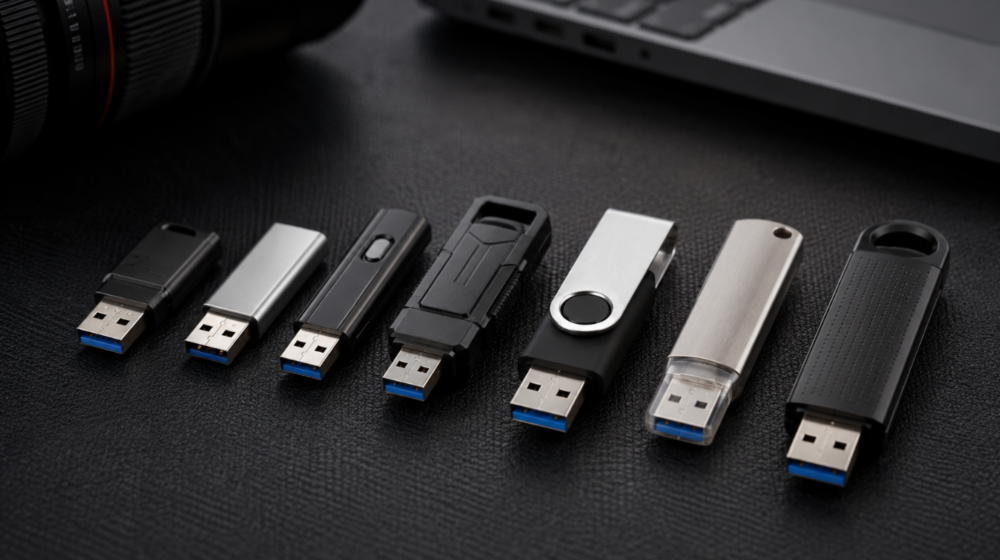
Choosing the right USB flash drive starts with understanding how much storage capacity you actually need. Many buyers focus on price alone, yet a few extra gigabytes can make a major difference when storing presentations, videos, software packages, or important business documents.
4GB And 8GB USB Flash Drives
A 4GB or 8GB USB stick remains a practical option for simple business applications. Around 4GB of storage space can hold approximately 1,000 high-resolution photos, 2,000 PDF documents, or several PowerPoint presentations. An 8GB model doubles those figures and provides enough room for product brochures, company profiles, training manuals, and sales documents.
Promotional campaigns often favour 8GB capacities because they strike a good balance between cost and usability. Many Australian businesses distribute 8GB thumb drives at trade shows, conferences, and recruitment events where recipients need access to brochures, catalogues, and contact information rather than large media files.
Lower-capacity flash drives also offer broad compatibility with older computers, laptops, and devices that still rely on USB Type A or USB A connections. As a result, 8GB remains one of the safest choices for mass giveaways.
16GB USB Flash Drives
A 16GB memory stick represents one of the most popular choices in the promotional products market. Capacity at this level can store approximately 4,000 photos, 4,000 to 5,000 documents, or around 4 hours of HD video content.
Corporate giveaways, sales presentations, and customer welcome packs often use 16GB USB drives because recipients can store personal files long after the original marketing material has been viewed. Additional storage increases the perceived value of the gift and encourages long-term brand exposure.
Many businesses choose 16GB promotional pen drives because pricing remains affordable when ordering large quantities. Bulk orders often show only a modest increase in cost compared to 8GB units, yet recipients gain twice the overall storage capacity.
32GB USB Flash Drives
A 32GB storage device delivers enough room for most business users and remains one of the most versatile options available today. Capacity at this level can hold roughly 8,000 documents, 8,000 photos, or between 8 and 10 hours of HD video.
Marketing agencies, educational institutions, training providers, and real estate companies frequently choose 32GB USB flash drives because modern content continues to grow in size. Property walkthrough videos, digital course materials, product demonstrations, and high-resolution marketing assets can quickly consume available storage.
For many organisations, 32GB represents the sweet spot between cost and functionality. Recipients gain enough room for business content while still having plenty of space available for personal use. Consequently, 32GB remains one of the most requested flash drive capacities across the promotional products industry.
64GB USB Flash Drives
A 64GB USB drive offers significant room for large files and multimedia content. Capacity at this level can store more than 16,000 documents, approximately 16,000 photos, or up to 20 hours of HD video depending on compression settings and file formats.
Employee onboarding programs often benefit from 64GB flash storage because HR teams can preload policy documents, training videos, software installers, compliance materials, and internal resources onto a single device. Product manufacturers also use 64GB drives for technical manuals, CAD drawings, installation guides, and support documentation.
When paired with USB 3.0 technology, a 64GB drive becomes even more practical. Transfer rates can reach up to 5Gbps under ideal conditions, which significantly reduces waiting times during large data transfers.
128GB And Larger USB Drives
High-capacity USB flash drives appeal to creative professionals, production companies, architects, engineers, and businesses that regularly work with large digital assets. A 128GB device can hold more than 32,000 documents, over 30,000 photos, or approximately 40 hours of HD video.
Video production projects, Adobe Creative Cloud files, large software packages, and extensive media libraries often require substantial storage space. A larger USB drive helps users carry all the data they need without relying on cloud access or external hard drive solutions.
Premium corporate gifts frequently include 128GB capacities because higher specifications create a stronger perceived value. Recipients often associate greater capacity, faster data transfer speed, and modern USB C compatibility with quality and professionalism.
How Many Files Can A USB Flash Drive Hold?
Actual storage capacity depends on file type, quality, and format. A simple PDF document may use less than 1MB, while a high-resolution video can exceed 1GB. Most people underestimate how much data storage modern USB flash drives provide.
Even an affordable 32GB USB stick can hold thousands of documents and photos, making it suitable for business presentations, marketing resources, and everyday file transfers.
|
Capacity |
Documents |
Photos |
HD Video |
Presentations |
|
8GB |
8,000 |
2,000 |
2 Hours |
160 |
|
16GB |
16,000 |
4,000 |
4 Hours |
320 |
|
32GB |
32,000 |
8,000 |
8 Hours |
640 |
|
64GB |
64,000 |
16,000 |
16 Hours |
1,280 |
|
128GB |
128,000 |
32,000 |
32 Hours |
2,560 |
Real Storage Examples
-
PDF document (500KB to 2MB)
-
Product brochure (5MB to 20MB)
-
PowerPoint presentation (10MB to 50MB)
-
High-resolution image (3MB to 10MB)
-
HD video file (1GB to 3GB per hour)
USB 2.0 Vs USB 3.0: Does Speed Matter?

A large USB flash drive sounds impressive, but speed often has a bigger impact on day-to-day use. Nobody wants to wait several minutes to copy a presentation, training video, or software package. For that reason, smart buyers look at both storage capacity and data transfer speed before choosing a USB drive.
What USB 2.0 Offers
USB 2.0 became the industry standard in the early 2000s and remains widely supported across older computers and business equipment.
Key specifications include:
-
Maximum theoretical speed: 480Mbps
-
Typical transfer speeds: 20MB/s to 35MB/s
-
Broad compatibility with older devices
-
Lower production costs for promotional USB products
An 8GB folder filled with PDFs, brochures, and presentation files may transfer in around 4 to 6 minutes on a standard USB 2.0 memory stick. For simple document distribution, that level of performance remains perfectly acceptable.
Why USB 3.0 Remains The Preferred Choice
USB 3.0 introduced a major performance jump and quickly became the preferred option for business users.
Benefits include:
-
Maximum theoretical speed: 5Gbps
-
Up to 10x faster than USB 2.0
-
Higher read and write speeds
-
Better performance with large files
-
Faster backups and file transfers
A 10GB training video package that takes several minutes on USB 2.0 can often transfer in less than 60 seconds on a quality USB 3.0 device. Marketing agencies, training providers, and creative teams often choose USB 3.0 because modern content consumes far more storage space than it did a decade ago.
Does A Larger Capacity Mean Faster Speeds?
Many buyers assume a 128GB USB stick must be faster than a 16GB model. Capacity and speed operate independently.
Several components influence performance:
-
Flash memory quality
-
Internal controller technology
-
USB interface version
-
File size being transferred
For example, a premium 32GB USB 3.0 drive can easily outperform a budget 128GB USB 2.0 drive during large data transfers. Storage tells you how much data fits on the device. Speed tells you how quickly you can access, copy, and transfer data.
USB A, USB Type A, USB C And Micro USB Explained
Connector choice affects compatibility just as much as speed.
|
Connector Type |
Common Devices |
|
USB A / USB Type A |
Desktop computers, laptops, monitors |
|
USB C |
New laptops, smartphones, tablets |
|
Micro USB |
Older phones, cameras, accessories |
USB A remains the most common USB connector in Australia because millions of computers still rely on the traditional rectangular USB port. Meanwhile, USB C continues to grow in popularity across Apple, Samsung, Lenovo, Dell, and other major brands.
For promotional campaigns, USB A offers the safest compatibility. Premium corporate gifts often include dual USB A and USB C connections, allowing recipients to connect the same device to multiple platforms without adapters.
Which USB Capacity Is Best For Promotional Campaigns?
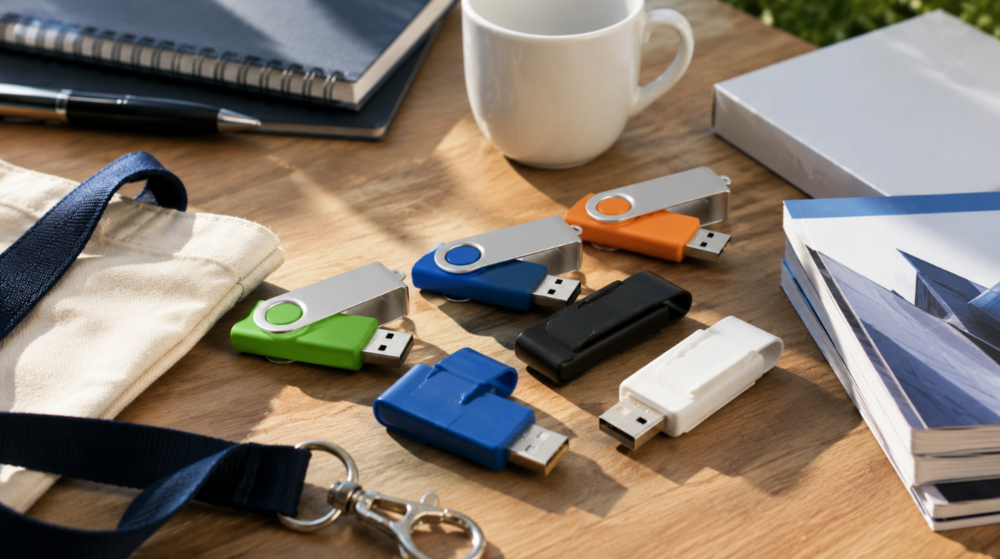
Promotional USB flash drives remain one of the few branded products that combine practical value, long-term use, and strong brand visibility.
Capacity plays a major role in campaign success because recipients judge a USB drive by how useful it remains after they access your content. An 8GB drive may suit a trade show giveaway, while a premium client gift often benefits from 64GB or 128GB of storage space.
Trade Shows And Event Giveaways
Large events often require hundreds or even thousands of promotional items, so cost efficiency becomes a priority. An 8GB or 16GB USB stick provides enough storage capacity for brochures, product catalogues, company profiles, and contact information without significantly increasing campaign costs.
Recommended capacities:
-
8GB
-
16GB
Products such as the USB Swivel Drive and USB Clipper Style work particularly well at exhibitions and conferences. Compact designs fit easily into event bags, while durable construction helps recipients continue using the storage device long after the event ends.
Sales Presentations And Client Meetings
Sales teams often share product demonstrations, pricing documents, proposal packs, videos, and technical specifications. Larger files require additional storage, especially when multiple presentations need to remain on the same device.
Recommended capacities:
-
16GB
-
32GB
A 16GB drive can comfortably store hundreds of PDF documents and dozens of PowerPoint presentations.
A 32GB model provides additional room for video content and interactive sales resources. The USB Swivel Drive offers a professional appearance for client meetings, while the NFC USB Flash Drive adds extra functionality through mobile device compatibility and quick content access.
Employee Welcome Packs
Modern onboarding programs include training videos, policy documents, software installers, HR resources, and company information. Combined file sizes can easily exceed several gigabytes, particularly in industries that rely on compliance training and technical documentation.
Recommended capacities:
-
32GB
-
64GB
A 32GB USB flash drive can hold approximately 8,000 documents or several hours of HD training content. Organisations that provide extensive onboarding resources often prefer 64GB models to allow room for future updates and additional files.
The NFC USB Flash Drive offers excellent versatility, while Eco Paper USB Drives appeal to businesses with sustainability goals.
Premium Client Gifts
Premium corporate gifts should provide genuine long-term value. Higher-capacity flash drives encourage regular use because recipients can store personal files, business documents, photos, videos, and backups on the same device.
Recommended capacities:
-
64GB
-
128GB
A 128GB USB drive can store more than 30,000 photos or around 40 hours of HD video. High-capacity options create a stronger perceived value than standard promotional products and often remain in use for several years.
The NFC USB Flash Drive suits technology-focused brands, while Eco Paper USB Drives help companies align premium gifting with environmental initiatives and responsible business practices.
Final Thoughts
Most people do not need the largest USB flash drive available. For everyday business use, a 16GB or 32GB USB drive provides enough storage space for documents, presentations, photos, and marketing materials.
Businesses that distribute promotional products often choose those capacities because they balance cost, usability, and long-term value.
Larger capacities become worthwhile when recipients regularly work with videos, software packages, design files, or other large files. A 64GB or 128GB drive offers more flexibility, but many users never fill that much storage. Ultimately, the best choice depends on file size, budget, and intended use.
A practical USB capacity guide starts with understanding what recipients will actually store, not simply choosing the biggest number available.
Frequently Asked Questions
Is 32GB enough for most users?
Yes, 32GB is more than enough for most business and personal applications. A 32GB USB flash drive can store thousands of documents, high-resolution images, sales presentations, and several hours of HD video. Many Australian businesses choose 32GB because it offers a strong balance between storage capacity, cost, and usability.
What is the most popular USB flash drive capacity?
16GB and 32GB remain the most commonly purchased flash drive capacities worldwide. A 16GB USB stick works well for promotional campaigns and document sharing, while 32GB suits users who need additional room for videos, software, and larger data files.
Does USB 3.0 increase storage capacity?
No. USB 3.0 improves data transfer speed, not storage capacity. A 32GB USB 2.0 drive and a 32GB USB 3.0 drive hold the same amount of data. USB 3.0 simply allows faster file transfers through an improved USB interface and higher transfer rates.
Can a USB flash drive replace an external hard drive?
A USB flash drive can replace an external hard drive for document storage, presentations, and everyday file sharing. External drives remain a better option for large backups because they often offer several terabytes of capacity. Many users keep a USB drive for portability and an external drive for long-term data storage.
How long can a USB flash drive retain data?
Quality flash memory can typically retain data for 10 years or longer when stored correctly. Temperature, humidity, usage patterns, and manufacturing quality all influence lifespan. Important files should always exist in multiple locations because no storage device offers a permanent guarantee against data loss.