



Types of lanyards may seem like a small detail, but the right choice can make a big difference at events, conferences, schools, and workplaces.
A lanyard does more than hold an ID card. It represents your brand, improves security, and keeps essential items within easy reach. Polyester, nylon, woven, and recycled options each offer unique benefits, while different clips and attachments suit different uses. A cheap lanyard can end up in the bin after one day.
A well-chosen branded lanyard can stay in use for months. This guide explains the materials, clips, and styles that deserve your attention.
Best Lanyards For Branding, Events & Everyday Use
These three lanyards offer the best combination of branding quality, practicality, and value for Australian organisations.
|
Product |
Best For |
Branding Quality |
Key Advantage |
|
Printed Polyester Lanyards |
Conferences, trade shows, corporate events |
★★★★★ |
Professional full-colour branding |
|
20mm Colour Max Lanyard |
Promotional campaigns, sponsor events |
★★★★★ |
Extra-wide print area for maximum visibility |
|
10mm Premium Stock Lanyards |
Schools, workplaces, visitor IDs |
★★★★★ |
Ready-to-ship with built-in safety break |
Types Of Lanyards By Material
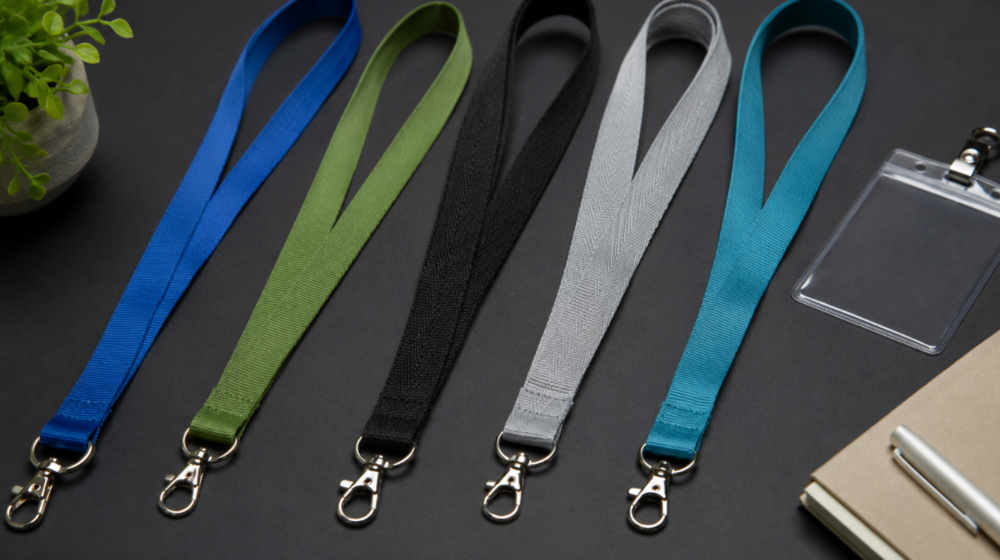
The most common types of lanyards start with the material. Fabric affects comfort, print quality, price, durability, and how professional the finished product looks.
For Australian events, schools, offices, universities, and trade shows, the right lanyard material can decide if people wear it all day or take it off after an hour.
1. Polyester Lanyards
Plyester lanyards are the most popular option for businesses that need a reliable, affordable, and polished branded lanyard. They suit conferences, expos, schools, councils, retail teams, healthcare events, and office staff IDs.
Polyester has a smooth, flat surface, so it works well for screen printed lanyards and simple logo designs. A one-colour logo, business name, website, or event name usually looks sharp on polyester. It also handles regular use well, which makes it a practical choice for custom lanyards that need to last beyond one event.
A standard polyester lanyard usually uses a 15mm or 20mm width. The 15mm option feels lighter, while the 20mm option gives your logo more space. For most businesses, 20mm gives the best mix of comfort, visibility, and value.
Best for:
-
Corporate events
-
Staff identification badges
-
Schools and universities
-
Visitor passes
-
Conferences
-
Budget-friendly branded giveaways
Polyester also works well with common lanyard attachments, such as bulldog clips, lobster claw clips, swivel hooks, and key rings. Add plastic badge holders and you have a simple, effective tool for visible identification and access control.
2. Tubular Lanyards
Tubular lanyards are made from stitched tube-style polyester, similar to a soft shoelace. They feel lightweight around the neck and usually cost less than flat polyester styles. This makes them a good choice for short events, schools, charity runs, volunteer teams, and high-volume promotional campaigns.
A tubular lanyard usually feels softer than a flat woven or nylon option, but the branding area is smaller and less crisp. Logos can still look good, but very fine details may not print as clearly. Simple text, one-colour branding, and basic logos suit this material best.
Most tubular lanyards come in 10mm to 12mm widths, so they suit light items such as ID cards, small keys, whistles, or event passes. They are not the best choice for heavy objects or detailed artwork.
Best for:
-
Short-term events
-
Budget-conscious campaigns
-
Volunteer teams
-
Schools
-
Simple branded giveaways
-
Lightweight id badges
Tubular styles suit brands that need volume. For example, an event with 1,000 attendees may choose tubular lanyards to keep costs low while still giving every guest a branded pass holder. They can still create a lasting impression when the logo, colour, and event theme match the rest of the campaign.
3. Nylon Lanyards
Nylon lanyards have a glossier, smoother finish than polyester. They feel slightly more premium and usually display colours with a brighter, cleaner look. This makes nylon a strong option for brands that want a sharper finish for staff IDs, VIP passes, product launches, and corporate programs.
Nylon costs more than standard polyester, but it offers a more polished look. It also feels strong and durable, so it works well for teams that wear lanyards every day. Many businesses choose nylon when brand presentation matters more than the lowest unit price.
A 20mm nylon lanyard gives enough room for strong logo placement, while a 25mm option can suit bold designs or premium event passes. Nylon also pairs well with metal clips, card holders, and strong attachment mechanism options.
Best for:
-
Premium corporate lanyards
-
VIP event passes
-
Staff ID programs
-
Brand activations
-
Long-term workplace use
-
High-visibility logo designs
Nylon suits high quality lanyards because it looks neat, feels durable, and supports clear branding. It is less common for very large budget orders, but it works well when the lanyard needs to feel like part of a professional uniform.
4. Woven Lanyards
A woven lanyard uses thread to create the design directly into the fabric. The logo is not printed on top. It becomes part of the material itself. This gives woven lanyards a textured, long-lasting finish that can handle daily wear.
Woven lanyards are best for simple logos, short text, and bold shapes. Very small letters, gradients, shadows, and detailed artwork do not suit this style. The stitch-based finish works best when the design uses 1 to 3 colours and has clean lines.
These lanyards often feel thicker and more durable than printed options. They suit workplaces, clubs, universities, government departments, and membership programs where people may use the same lanyard for months.
Best for:
-
Long-term staff use
-
Clubs and associations
-
Schools and universities
-
Simple logos
-
Durable brand programs
-
Premium ID lanyards
A woven style can cost more than basic polyester, but the extra durability can make sense for extended use. It also gives a more tactile finish, which helps the lanyard feel less disposable.
5. RPET Recycled Lanyards
RPET recycled lanyards are made from recycled PET, often sourced from plastic bottles. They are one of the best options for brands that want an eco friendly option without moving away from practical event merchandise.
RPET feels similar to polyester because both materials come from the same plastic family. The main difference is the recycled source. This gives businesses a more responsible choice for events, conferences, councils, universities, and campaigns with sustainability goals.
An RPET lanyard can still support strong branding, clear print, and common attachments. It can hold plastic badge holders, identification badges, access cards, keys, or event passes. Many brands use RPET when they want eco friendly lanyards that still look professional.
Best for:
-
Sustainability-focused events
-
Councils and universities
-
Corporate ESG campaigns
-
Eco product launches
-
Conferences with green policies
-
Branded merchandise programs
RPET lanyards are a strong fit when your brand wants to reduce reliance on virgin plastic. They also help align the lanyard with recycled notebooks, reusable cups, tote bags, and other sustainable promotional products.
For Australian businesses that want practical merchandise with a cleaner story, RPET is one of the most useful lanyard material types available.
Recommended Lanyards For Events, Schools & Workplaces

These popular options cover most event, education, and workplace requirements across Australia.
|
Product |
Best For |
Material |
Branding |
Standout Feature |
|
Printed Polyester Lanyards |
Conferences & trade shows |
Polyester |
Full-colour print |
Professional branded appearance |
|
20mm Colour Max Lanyard |
Marketing campaigns |
Polyester |
Edge-to-edge branding |
Large logo display area |
|
10mm Premium Stock Lanyards |
Schools & staff IDs |
Premium polyester |
Plain colours |
Fast dispatch with safety break |
|
5mm Plain Economy Stock Lanyards |
Large events |
Polyester |
Plain colours |
Budget-friendly bulk option |
|
Wrist Strap Lanyards |
Keys & USB drives |
Polyester |
Printed or woven |
Compact and lightweight |
Best For Conferences & Trade Shows
Printed Polyester Lanyards offer the best balance of branding, comfort, and affordability. The smooth material supports sharp logos, sponsor branding, and event messaging, making them one of the most popular custom lanyards for Australian conferences and trade shows.
Best For Maximum Brand Visibility
The 20mm Colour Max Lanyard provides extra print space compared to standard designs. Businesses often choose this option when logos, campaign messaging, or sponsor branding need to stand out across crowded exhibition halls and large scale events.
Best For Schools & Workplaces
10mm Premium Stock Lanyards include a built-in breakaway feature, making them suitable for schools, healthcare facilities, and workplaces that prioritise safety and visible identification. Their slimmer profile also feels comfortable during extended periods of daily wear.
Best Budget Choice
The 5mm Plain Economy Stock Lanyard suits organisations that need hundreds or thousands of lanyards quickly. Event organisers often choose this option for volunteer programs, visitor management, and temporary identification badges because it keeps costs low without sacrificing functionality.
Best For Keys, USBs & Access Devices
Wrist Strap Lanyards work well when a traditional neck lanyard feels unnecessary. They provide a secure attachment point for keys, USB drives, access cards, and electronic devices while remaining compact enough for everyday use.
Common Lanyard Clip Types Explained
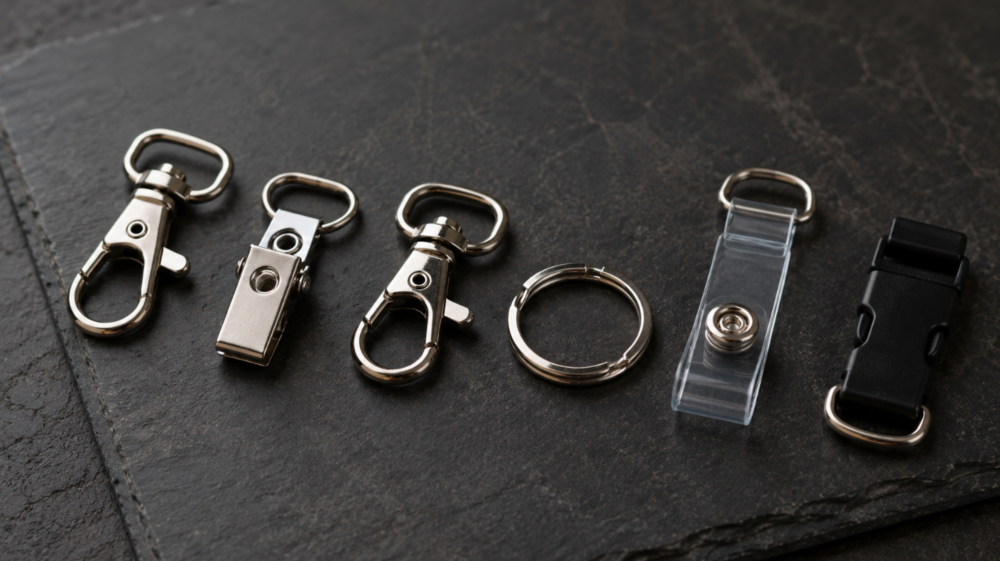
The attachment at the end of a lanyard often determines how convenient, secure, and durable it will be during daily use.
Swivel Hook
If you've attended a conference, visited a corporate office, or worked in a workplace that requires visible identification, you've probably used a swivel hook. It remains the most popular attachment in Australia because it suits almost every application.
The hook rotates 360 degrees, which prevents twisting when people scan access cards, open doors, or display identification badges. A rotating connection also reduces wear on the lanyard itself because the fabric does not constantly twist under tension.
A swivel hook works best with:
-
ID card holders
-
Visitor passes
-
Event credentials
-
Security cards
-
Small key sets
Many event organisers choose swivel hooks for large scale events because attendees can quickly present credentials without removing the lanyard. That small convenience becomes important when hundreds or thousands of people move through registration points every hour.
Bulldog Clip
A bulldog clip uses a spring-loaded metal clamp rather than a hook. Instead of connecting through a punched hole, it grips directly onto a card, pass, or holder.
This design solves a specific problem. Some credentials arrive without slots or attachment holes. A bulldog clip eliminates the need for extra accessories.
Bulldog clips often appear at:
-
Conferences
-
Government facilities
-
Training programs
-
Temporary workplaces
-
Visitor management systems
The main advantage is versatility. The clip can attach to almost any flat item. The drawback is that repeated clamping may leave marks on paper credentials or lightweight materials.
For organisations that regularly issue temporary passes, bulldog clips provide a simple and cost-effective solution.
Lobster Claw Clip
The lobster claw clip takes its name from its shape. A spring-loaded gate opens when pressure is applied and closes automatically once released.
This style creates a stronger connection than many standard hooks. Users cannot accidentally slide items off the attachment point, which makes lobster claw clips popular when the lanyard carries valuable items.
Common uses include:
-
Access cards
-
USB drives
-
Keys
-
Electronic passes
-
Multi-card holders
Many businesses select lobster claw clips when employees carry keys throughout the day. The secure locking mechanism reduces the chance of accidental loss.
A lobster claw attachment also gives custom lanyards a more premium appearance compared to basic hooks.
Split Ring Attachment
A split ring works exactly like the ring found on a keychain.
Instead of opening and closing with a spring mechanism, users thread items directly onto the ring. This creates one of the most secure lanyard attachments available.
Split rings are ideal when the attached item stays permanently connected.
Typical examples include:
-
Office keys
-
Facility keys
-
Security keys
-
Locker keys
-
Small tools
The downside is convenience. Removing items takes longer than with a swivel hook or lobster claw. For this reason, split rings suit permanent use rather than event credentials.
Facilities managers, maintenance teams, and security staff often prefer split rings because reliability matters more than quick removal.
Dual Clip Lanyards
Most lanyards use a single attachment point. Dual clip lanyards use two.
Each end connects to a separate clip, creating a wider and more balanced support system for larger badge holders.
This design prevents credentials from flipping over, twisting, or rotating while the wearer walks.
Dual clip systems frequently appear in:
-
Corporate conferences
-
Exhibitions
-
Trade shows
-
Government events
-
Healthcare facilities
Large landscape-format passes often require dual clips because a single connection point cannot provide enough stability.
For event organisers who want logos, sponsor names, and attendee information to remain visible all day, dual clip lanyards offer a practical solution.
Breakaway Safety Release
A breakaway lanyard includes a specialised safety break connector that separates when enough force is applied.
This feature exists for one reason: safety.
If the lanyard becomes trapped in machinery, caught on equipment, snagged on furniture, or pulled unexpectedly, the breakaway connector releases before serious injury occurs.
Breakaway systems have become increasingly common in:
-
Schools
-
Warehouses
-
Manufacturing facilities
-
Healthcare environments
-
Distribution centres
The release point usually sits behind the neck and reconnects easily after use.
Although a breakaway model costs slightly more than a standard lanyard, the added safety feature can significantly reduce risk in active workplaces. Many organisations now treat the breakaway feature as a standard requirement rather than an optional upgrade.
For workplaces that prioritise employee welfare and compliance, a breakaway release remains one of the most valuable upgrades available.
Conclusion
The wide range of types of lanyards available today means there is a suitable option for almost every workplace, event, school, or organisation. Material, attachment type, branding method, and safety features all play an important role in the final choice.
A well-designed lanyard does more than hold ID badges. It strengthens brand identity, improves access control, supports visible identification, and leaves a professional impression long after an event ends. Choosing the right lanyard helps maximise both functionality and brand exposure.
Frequently Asked Questions
What is the most popular type of lanyard?
Polyester lanyards are the most popular choice because they offer an excellent balance of durability, comfort, print quality, and affordability. They work well for conferences, schools, workplaces, visitor management programs, and trade shows, making them one of the most versatile lanyard types available.
Which lanyard material lasts the longest?
A woven lanyard and premium nylon lanyards typically offer the longest lifespan. Woven designs integrate the logo directly into the fabric, which prevents fading over time, while nylon provides exceptional strength and resistance to daily wear. Both options perform well during extended periods of regular use.
What is a breakaway lanyard?
A breakaway lanyard includes a special safety break connector that separates when excessive force is applied. This safety feature helps reduce injury risk if the lanyard becomes caught on machinery, furniture, doors, or equipment. Schools, healthcare facilities, and industrial workplaces commonly choose breakaway models to improve user safety.
Are recycled lanyards suitable for events?
Yes. Modern recycled PET lanyards provide print quality and durability similar to standard polyester products. Many organisations now use eco friendly lanyards at conferences, exhibitions, and corporate events to support sustainability goals without compromising appearance or performance.