



A favourite cap can lose its shape faster than most people expect. One day it sits perfectly, and the next the crown looks uneven, the brim bends, and dust has settled into every corner.
Knowing how to store hats properly helps you avoid that problem and keeps your headwear ready to wear at any time. A good storage setup does more than save space in the closet. It protects materials, preserves hat sizes, and keeps everything looking sharp.
This guide covers practical hat storage ideas for caps, bucket hats, felt hats, and more, so every piece stays in great condition for years.
Best Hats To Keep Organised And Ready To Wear
If you're investing in quality headwear, it makes sense to store it properly. Here are three popular options from our range that are easy to wear, easy to store, and built for everyday use.
|
Product |
Best For |
Storage Recommendation |
|
Pitcher Baseball Cap |
Everyday wear, events, sports |
Store on a hat rack or shelf to protect the structured crown |
|
Foldable Bucket Hat |
Travel, outdoor events, promotions |
Fold neatly and keep in a drawer or storage pouch |
|
Woolly Beanie |
Winter uniforms and cold weather |
Store flat in a drawer or fabric storage basket to maintain shape |
The Best Way To Store Hats Depends On The Type Of Hat
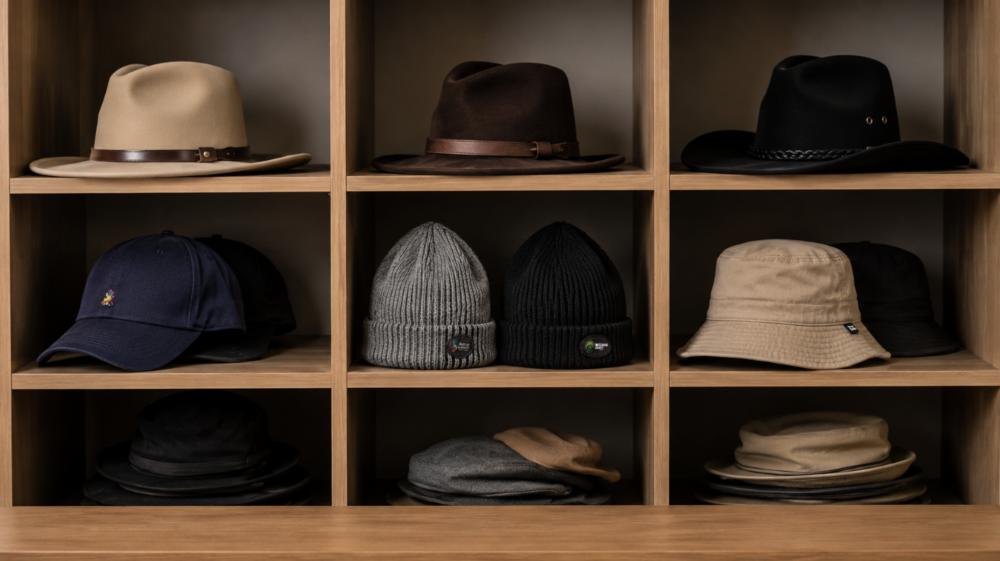
A storage method that works perfectly for a beanie can ruin a structured cap or wide brim hat. The material, crown construction, and brim size all play a role in how you should store your hats.
Get it right and your favourite headwear can look new for years. Get it wrong and you may end up with crushed crowns, bent brims, faded colours, and hats you no longer enjoy wearing.
1. How To Store Baseball Caps And Structured Caps
A structured baseball cap needs more support than most people realise. The front panels contain stiff backing that creates the cap's shape. Once that structure bends, it can be difficult to restore.
To store structured caps properly:
-
Use a hat rack or shelf instead of deep drawers.
-
Leave 8-10cm between each cap.
-
Position the brim facing outward.
-
Keep the crown fully supported.
-
Avoid stacking more than 2 caps together.
-
Keep caps away from direct sunlight.
Many people use wall-mounted hooks, but placement matters. Hanging a cap by the adjustment strap for months can stretch the rear opening. A dedicated hat hanger that supports part of the crown usually works much better.
A standard 90cm shelf can comfortably hold 8-12 caps while keeping every design visible and within easy access. If you have large baseball cap collections, a wall display often works better than a crowded closet shelf.
Our Pitcher Baseball Cap features structured front panels and a mid visor profile. A shelf display or quality hat rack helps maintain that clean shape far better than tossing it into a gym bag after every wear.
2. How To Store Bucket Hats, Beanies And Soft Headwear
Soft bucket hats, beanies, and casual headwear give you more flexibility because they don't rely on rigid crown construction. That doesn't mean you should stuff them into the back of a cupboard and forget about them.
A practical way to store soft hats:
-
Fold bucket hats once along the sides of the brim.
-
Store beanies flat instead of rolling them tightly.
-
Separate winter and summer hats.
-
Use fabric baskets or shallow drawers.
-
Keep moisture away from wool fibres.
-
Avoid overfilling storage containers.
A typical drawer can comfortably hold 8-12 folded bucket hats without damaging their shape. Tight packing creates unnecessary creases that become harder to remove over time.
Our Foldable Bucket Hat solves a common storage problem because it folds neatly into its own pouch. That makes it a great option for staff events, travel, school programs, and promotional campaigns where portability matters.
For beanies and soft winter hats, a breathable storage container works better than a sealed plastic bag. Air circulation helps maintain the quality of the fabric while reducing trapped moisture.
3. How To Store Felt Hats, Wool Hats And Cowboy Hats
Felt hats, wool hats, and cowboy hats often represent the biggest investment in a hat collection, which is why they deserve extra care. Pressure on the crown or brim can leave permanent marks.
The safest storage method includes:
-
Fill the crown with tissue paper.
-
Use individual hat boxes.
-
Store one hat per box.
-
Place boxes on flat shelving.
-
Keep hats away from humidity.
-
Avoid placing accessories on top.
Many collectors prefer traditional hat boxes because they provide protection against dust, sunlight, and accidental crushing. A quality box also prevents hats from rubbing against each other during long-term storage.
Wool-based headwear deserves particular attention. Our Woolly Beanie contains a 30% wool blend, which helps deliver warmth and comfort during colder months. To maintain the fabric, store wool beanies flat inside a drawer or breathable storage container rather than hanging them.
If you own several delicate hats, label each box and include a photo on the outside. That simple tip saves time and reduces unnecessary handling. A well-cared-for felt hat can maintain its appearance for 10 years or more, while poor storage can damage the brim within a single season.
4. How To Store Wide Brim And Straw Hats
Large wide brim hats require more storage space than almost any other style. The biggest mistake people make is squeezing them into a narrow shelf where the brim touches surrounding objects.
The best way to store these hats:
-
Place the hat upside down on its crown.
-
Use a shelf wider than the brim diameter.
-
Leave at least 5cm clearance around the edges.
-
Cover the hat to keep it dust free.
-
Avoid hanging heavy hats on wall hooks.
-
Keep the storage area cool and dry.
A typical wide brim hat can measure 35-40cm across, so shelf depth matters. If the brim hangs over an edge, gravity can slowly alter its shape.
Our Barbados Wide Brim Hat looks its best when stored on an open shelf or inside a large storage box with plenty of room around the brim. The same approach works for most straw hats because it protects the crown while helping the brim maintain its natural curve.
If you want to display hats as part of your home decor, a dedicated hat stand or mannequin head offers support without placing pressure on the brim.
Should You Hang, Stack Or Box Your Hats?
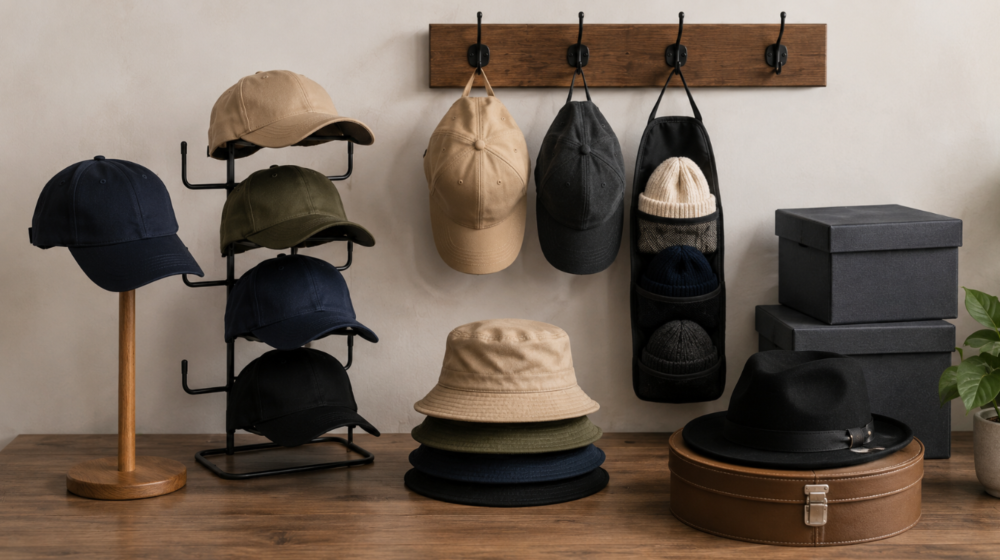
Most people damage their hats because they choose the wrong storage method. A structured cap that looks perfect on a hat rack may lose its shape inside a crowded drawer, while a felt hat that belongs in hat boxes can end up with a bent brim after a few weeks on a shelf.
The right choice depends on the hat's material, crown structure, and how often you wear it.
Use this quick guide:
-
Use a hat rack for baseball caps and everyday headwear.
-
Install wall hooks for hats you wear several times per week.
-
Choose a hat hanger inside a wardrobe for easy closet storage.
-
Display premium hats on a hat stand to support the crown.
-
Store felt, wool, and delicate hats in hat boxes.
-
Use traditional hat boxes for long-term storage and seasonal hats.
-
Avoid stacking more than 3 structured hats on top of each other.
If you wear a hat every day, hanging it usually makes the most sense because it stays visible and ready to grab. If you own a growing collection or expensive styles, boxing them offers better protection against dust, sunlight, and accidental crushing.
Many collectors for caps and hats use a combination of open displays for daily hats and traditional hat boxes for pieces they only wear a few times each year.
Smart Hat Storage Ideas When Space Is Limited
Small homes, apartments, and busy family households rarely have spare room for a dedicated hat display. The good news is that you don't need a walk-in wardrobe to keep hats organised. A few smart storage solutions can free up space while keeping every hat visible and within easy access.
|
Storage Solution |
Best For |
Space Needed |
|
Closet door organiser |
Everyday caps |
Very Low |
|
Door hangers |
Families with multiple hats |
Very Low |
|
Wall-mounted hooks |
Frequently worn hats |
Low |
|
Vertical wall storage |
Small bedrooms |
Low |
|
Shallow drawers |
Bucket hats and beanies |
Medium |
|
Decorative hat wall |
Large collections |
Medium |
A closet door often provides unused storage space. Over-the-door organisers can hold 10-20 caps without taking up shelf space. If you wear the same hats each week, wall hooks near an entryway make it easy to grab one before heading out the door.
For soft hats, drawers usually work best. Bucket hats and beanies sit flat and stay protected from dust. If you own a larger collection, a dedicated hat wall can turn storage into part of your home décor while keeping every hat visible.
How To Store A Hat Collection Without Crushing The Brim
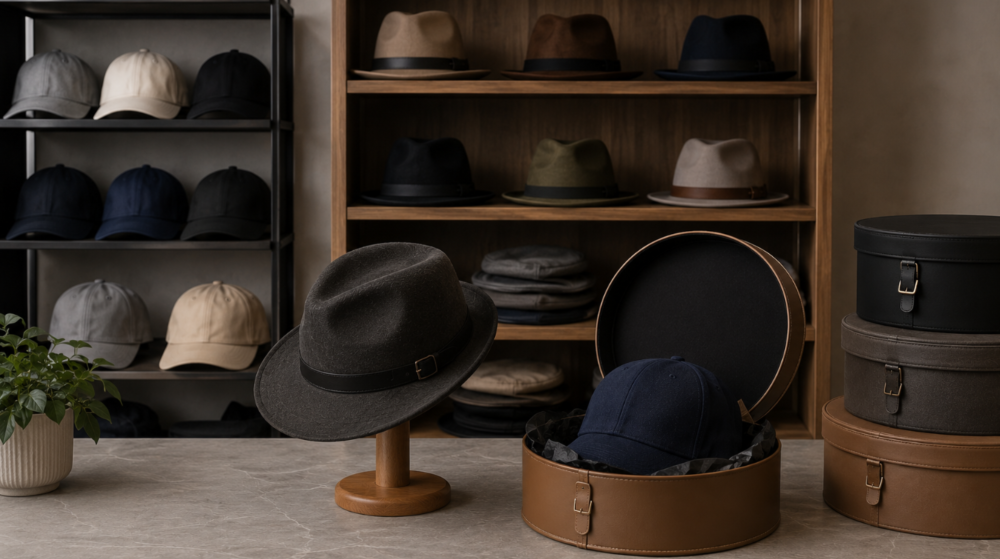
A growing hat collection creates a new challenge. What works for five hats rarely works for fifty. The biggest mistake collectors make is stacking hats on top of each other until the bottom rows lose their shape.
Follow These Rules
-
Store hats in a single layer whenever possible.
-
Leave space between brims.
-
Avoid placing heavy hats on lighter hats.
-
Use shelves at least 30cm deep for larger styles.
-
Rotate hats occasionally to reduce pressure points.
-
Prioritise crown protection for structured hats.
Many baseball cap collections benefit from tiered shelving because every cap remains visible. Once hats disappear into piles, people often stop wearing half of their collection.
For premium pieces, the goal is simple: prevent crushing at all costs. A bent brim can often be reshaped, but a collapsed crown may never return to its original condition. Hat stands, shelf dividers, and dedicated display systems all help with maintaining shape over the long term.
Collectors who regularly display hats often follow a simple rule: if two hats touch each other in storage, there probably isn't enough room. A little extra space today can save years of wear and damage later.
Conclusion
Knowing how to store hats properly can add years to the life of your favourite headwear. The best storage method depends on the style, material, and how often you wear it.
Structured caps benefit from shelves, hat racks, and wall displays, while felt hats, wool hats, and wide brim styles need extra protection through hat boxes and careful handling.
Small changes such as avoiding direct sunlight, keeping hats dust free, and giving each piece enough space can make a noticeable difference.
A well-organised collection not only looks better but also keeps every hat ready to wear whenever you need it. The goal is simple: protect the crown, preserve the brim, and maintain the shape.
Frequently Asked Questions
What is the best way to store hats long term?
Long-term storage works best with hat boxes, especially for delicate hats, felt hats, and seasonal hats. Fill the crown with tissue paper, keep the box in a cool location, and avoid areas with excessive humidity or direct sunlight.
Is it better to hang hats or store them on a shelf?
It depends on the hat type. Structured caps usually do well on a shelf or hat rack where the crown stays supported. Heavy hats, wide brim hats, and premium pieces often benefit from shelves or boxes rather than hanging storage.
Can hats lose their shape in storage?
Yes. Crowded shelves, stacked hats, and poor storage conditions can bend the brim or collapse the crown. Even a few weeks of pressure can leave visible marks on structured hats.
Should I store hats in plastic bags?
A plastic bag may keep dust away, but it can also trap moisture. Breathable fabric storage bags or traditional hat boxes are usually a better option for long-term protection.
How many hats can I safely stack together?
For structured caps, avoid stacking more than two or three hats at a time. Large stacks increase pressure on the lower hats and can affect both the crown and brim.