



How to clean a stainless steel water bottle sounds simple until you open the lid and get hit with a strange smell that definitely wasn't there last week.
Even the best stainless steel water bottle can collect bacteria, coffee residue, mineral deposits, and hidden odours if you skip regular cleaning. The good news? Most smells disappear with a few household items and a couple of minutes of effort.
Stainless Steel Water Bottles That Are Easy To Clean
If you're looking for a stainless steel water bottle that's simple to maintain, these popular options combine durable construction with easy-clean designs that suit everyday use.
|
Bottle |
Capacity |
Best For |
|
Dynamic 720ml Metal Drink Bottle |
720ml |
Gym, travel, and everyday hydration |
|
500ml Komo Precious Metal Drink Bottle |
500ml |
Office use, commuting, and work desks |
|
450ml Berkeley Matte Metal Drink Bottle |
450ml |
Everyday carry, gifting, and personal use |
How To Clean A Stainless Steel Water Bottle Every Day
A quick daily clean prevents most odours, stains, and bacteria before they become a problem. You don't need special products or a complicated routine.
A few minutes with warm water, dish soap, and the right cleaning tools will keep your stainless steel water bottle fresh and ready for your next drink.
Empty The Bottle And Rinse
Start by emptying the bottle as soon as you finish your drink. Many people leave a half-finished bottle on a desk, in a car, or in a gym bag overnight. That creates the perfect environment for bacteria and unpleasant smells.
Fill the bottle with warm water, close the lid, and give it a quick shake. Pour the water out and repeat if any residue remains inside.
A simple rinse helps remove:
-
Drink residue
-
Loose bacteria
-
Coffee stains before they set
-
Sugar left behind by sports drinks
-
Unpleasant smells before they develop
Wash With Warm Soapy Water
Next, add a few drops of liquid soap and fill the bottle halfway with warm soapy water.
Many people ask if hot soapy water works better. In most cases, yes. Warm or hot water helps loosen oils, drink residue, and bacteria more effectively than cold water. It also helps lift stubborn smells that can cling to stainless steel surfaces.
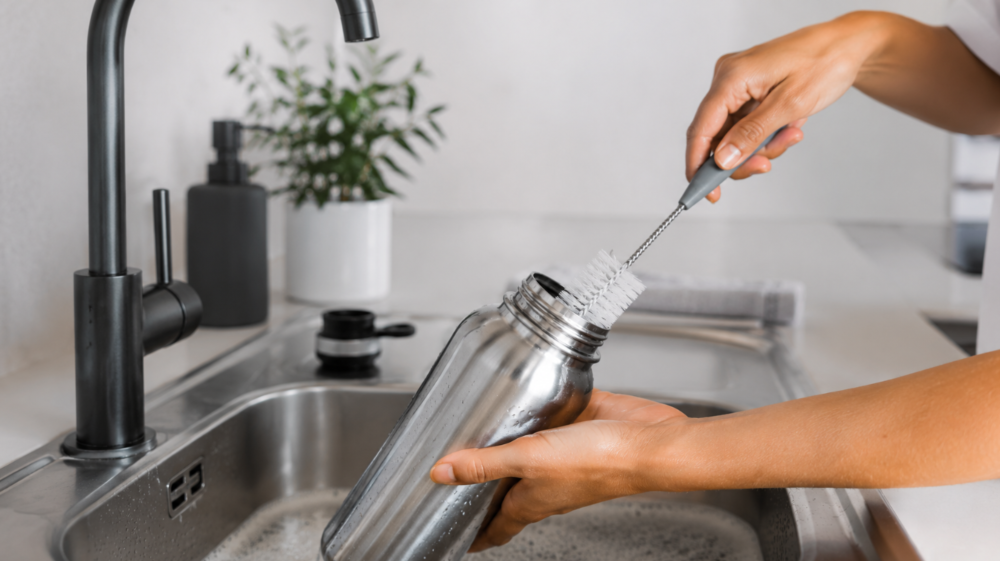
Place your hand over the opening, shake the bottle thoroughly, then use a brush to clean every internal surface.
Pay special attention to:
-
The bottom of the bottle
-
Internal corners
-
Areas around the neck
-
The threads where the lid screws on
Scrub With A Bottle Brush
A quality bottle brush makes a huge difference.
Choose a brush with soft bristles that can reach the full depth of the bottle without damaging the interior. Scrub the bottom, sides, and corners thoroughly. Areas near the base often collect the most residue because water doesn't always flush them out completely during a rinse.
Avoid using steel wool or abrasive scrubbers. Stainless steel is durable, but rough materials can leave fine scratches on the surface. Those scratches create tiny areas where residue and bacteria can collect over time.
A good cleaning routine should include:
-
A long bottle brush for the interior
-
Soft bristles that won't scratch stainless steel
-
Enough pressure to remove residue without damaging the finish
-
Regular cleaning after heavy use
Bottles with wider openings also make cleaning much easier because the brush can reach every part of the interior.
The Gripper Stainless Steel Bottle is a good example. Its wide-mouth design provides better access for a bottle brush, which makes daily cleaning faster and more effective. The built-in straw design also suits active lifestyles, but like any bottle with drinking components, it benefits from regular cleaning to stay fresh and hygienic.
Clean The Lid And Silicone Seals
Many bottle owners focus on the inside of the bottle and completely forget the lid.
In reality, the lid often causes more odours than the bottle itself.
Moisture collects around threads, drinking spouts, internal straws, and silicone seals. Those hidden spaces trap residue and allow bacteria to grow if they aren't cleaned regularly.
Remove any seals that can safely come out according to the manufacturer's instructions.
Wash each component separately using warm soapy water.
Pay close attention to:
-
Silicone seals
-
Drinking spouts
-
Flip-top mechanisms
-
Straw openings
-
Screw threads
-
Underside of the lid
Rinse And Air Dry Completely
Once everything is clean, rinse the bottle thoroughly with fresh water.
Any remaining soap residue can affect the taste of your next drink and create an unpleasant smell. Continue to rinse until no soap bubbles remain.
After rinsing:
-
Leave the bottle open.
-
Place the lid separately.
-
Allow all parts to air dry naturally.
-
Wait until every component is completely dry before reassembly.
Many odour problems start because people close the lid while moisture remains inside. A damp bottle creates ideal conditions for bacteria growth, especially in warm environments.
For the best results, leave your stainless steel water bottle upside down on a drying rack and allow it to air dry completely. A fully dry bottle stays fresher, smells better, and requires fewer deep cleans throughout the year.
How To Clean Lids, Straws And Hard-To-Reach Areas
If your bottle still smells after a thorough wash, the problem often isn't the bottle itself. In many cases, odours come from the lid, drinking spout, or hidden spaces around silicone seals.
These areas trap moisture, residue, and bacteria, especially when bottles stay closed for long periods. A clean bottle paired with a dirty lid can still produce unpleasant smells and affect the taste of your drink.
Clean Straws Thoroughly
Reusable bottles with built-in straws need extra attention. Water, sports drinks, coffee, and flavoured beverages can leave residue inside the narrow tube where a normal bottle brush can't reach.
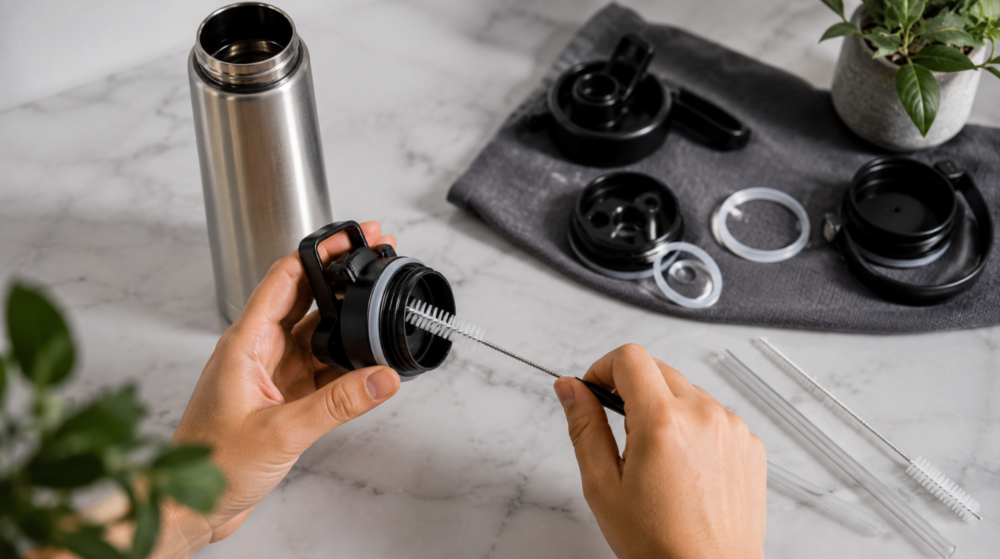
Use a straw cleaning brush every time you deep clean your bottle. Push the brush through the full length of the straw several times, then rinse thoroughly with warm water.
Focus On Seals And Threads
Many bottle lids contain removable silicone seals that create a watertight fit. Remove these seals if the manufacturer allows it. Wash them separately using warm soapy water.
Use a small brush to clean:
-
Around silicone seals
-
Screw threads
-
Flip-top mechanisms
-
Drinking spouts
-
Tight corners inside the lid
These areas often collect the most bacteria and residue.
Check Vacuum Seal Lids
A vacuum seal lid can contain multiple components that hold moisture after washing. Take a few extra minutes to inspect every part of the lid and allow everything to dry fully before reassembly.
As a simple rule, if a bottle develops an odour soon after cleaning, check the lid first. Most smell problems start there, not inside the bottle.
Can You Put A Stainless Steel Water Bottle In The Dishwasher?
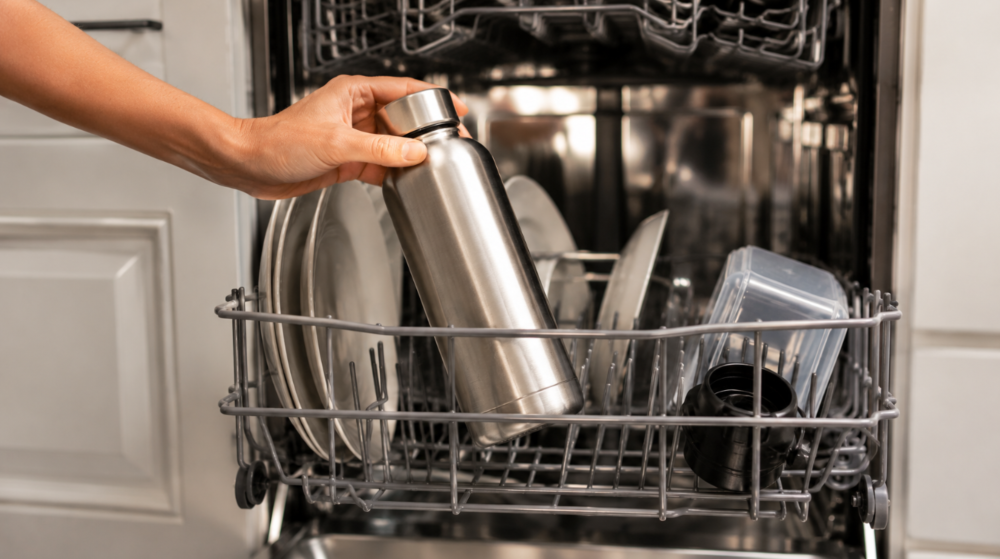
Many people assume every stainless steel water bottle can go straight into the dishwasher, but that's not always the case. Some drink bottles are fully dishwasher safe, while others require hand washing to protect their insulation, finish, or lid components.
The biggest difference comes down to construction. Single-wall bottles are often dishwasher safe, while many insulated bottles require extra care.
Double-wall vacuum-insulated bottles contain an internal vacuum seal that helps keep drinks hot or cold for hours. Excessive heat and repeated dishwasher cycles can sometimes affect that insulation over time.
If the manufacturer confirms the bottle is dishwasher safe:
-
Place it on the top rack whenever possible
-
Separate the lid and removable components
-
Allow everything to dry fully before reassembly
-
Avoid overcrowding the dishwasher
Quality stainless steel bottles are designed for years of daily use when cared for properly. Products such as the Thermo Double Wall Stainless Steel Bottle combine durable stainless steel construction with insulated performance, making them suitable for everyday work, travel, gym sessions, and outdoor activities.
Top Tips To Keep Your Bottle In Tip Top Condition
A good stainless steel water bottle can last for years, but a few simple habits make a big difference. Regular maintenance helps prevent smells, keeps your bottle looking good, and ensures every drink tastes as fresh as possible.
Follow these simple daily care tips to keep your bottle in tip top condition:
-
Rinse after every drink. Even plain water can leave mineral deposits behind over time.
-
Air dry after washing. Moisture trapped inside a closed bottle creates ideal conditions for bacteria.
-
Store with the lid removed. Good airflow helps prevent stale smells and keeps the interior fresh.
-
Deep clean regularly. A thorough clean every few weeks helps remove hidden residue before it becomes a problem.
-
Avoid long-term residue build-up. Don't leave drinks sitting in your bottle for days at a time.
-
Clean after coffee, sports drinks, and flavoured beverages. These drinks leave stronger residue than water and can affect the taste of future drinks.
In those cases, replacing the bottle may be the better long-term solution. The 450ml Berkeley Matte Metal Drink Bottle offers durable stainless steel construction, a simple design that's easy to maintain, and reliable everyday performance for work, travel, or daily hydration. With regular cleaning and proper care, a quality bottle like this can stay fresh and functional for years.
Conclusion
Keeping a stainless steel water bottle clean doesn't require much time, but it does require consistency.
A quick daily wash with warm soapy water helps prevent bacteria, residue, and unpleasant smells before they become a problem. A deeper clean every few weeks can remove stubborn odours and keep your bottle in excellent condition.
Don't forget to pay attention to lids, silicone seals, and straws, as these areas often hide the most residue. Always allow your bottle to air dry completely before storage.
Frequently Asked Questions
How often should I clean a stainless steel water bottle?
You should rinse your bottle daily and wash it with warm soapy water after use. If you only use it for water, a daily wash and a deep clean every two to four weeks is usually enough. Bottles used for coffee, sports drinks, or flavoured beverages should be cleaned after every use.
Can boiling water help remove smells from a stainless steel bottle?
Yes, boiling water can help loosen light residue and reduce mild odours. Pour boiling water into the bottle, let it sit for a few minutes, then rinse thoroughly. For stronger smells, baking soda or white vinegar will usually produce better results.
Is baking soda or white vinegar better for odour removal?
Both methods work well, but they solve slightly different problems. Baking soda is often best for everyday odours and light residue, while white vinegar tends to work better on stronger smells and mineral deposits.
Why does my stainless steel water bottle still smell after washing?
If a bottle still smells after cleaning, the problem often comes from the lid, straw, or silicone seals rather than the bottle itself. Hidden residue and bacteria can collect in these hard-to-reach areas.