



A hat size chart might not sound exciting until you end up with a hat that pinches your forehead, slips over your eyes, or spends more time in the cupboard than on your head. A great hat should feel comfortable from the moment you put it on.
That starts with the right size. In this guide, you'll learn how to measure your head accurately, understand Australian hat sizing, and choose the best fit for caps, bucket hats, and other popular styles.
If you're ordering custom hats for staff, sporting clubs, events, or giveaways, a few simple measurements can save a lot of guesswork.
Recommended Hats For Different Uses
If you're looking for a hat that's easy to size, comfortable to wear, and suitable for branding, these three options cover most Australian events, workplaces, and promotional campaigns.
|
Product |
Best For |
Fit Style |
Standout Feature |
|
Custom Baseball Caps |
Staff uniforms, clubs, giveaways |
Adjustable |
Easy fit for most head sizes |
|
Parkar Bucket Hat Cap |
Outdoor events, schools, festivals |
Relaxed fit |
Extra sun coverage and comfort |
|
Barbados Wide Brim Hat |
Outdoor work, tourism, summer promotions |
Structured fit |
Wide brim for maximum sun protection |
A quick head measurement combined with the right hat style will help you choose a hat that looks great, feels comfortable, and gets plenty of use long after the event ends.
Australian Hat Size Chart
A hat size chart takes the guesswork out of buying a new hat. Once you have your head measurement, you can quickly match it to the correct Australian size.
Most manufacturers use centimetres, while some premium brands also include traditional fitted sizes such as 6 7/8, 7 1/4, or 7 5/8.
|
Head Circumference (cm) |
Size |
Fitted Size |
|
54 cm |
S |
6 3/4 |
|
55 cm |
S |
6 7/8 |
|
56 cm |
M |
7 |
|
57 cm |
M |
7 1/8 |
|
58 cm |
L |
7 1/4 |
|
59 cm |
L |
7 3/8 |
|
60 cm |
XL |
7 1/2 |
|
61 cm |
XL |
7 5/8 |
|
62 cm |
XXL |
7 3/4 |
|
63-64 cm |
Extra Large |
7 7/8 - 8 |
Most Australian adults fall between 57 cm and 60 cm, which typically translates to M, L, or XL sizing. Keep in mind that slight variations exist between brands, materials, and hat styles, so a bucket hat may feel different from a structured cap even when both carry the same size label.
If your head circumference sits between two sizes, choose the larger option. A slightly roomier hat usually feels more comfortable than one that feels too tight, and many styles include an internal sweatband or adjustment feature that helps create a more snug fit.
How To Measure Your Head For A Hat
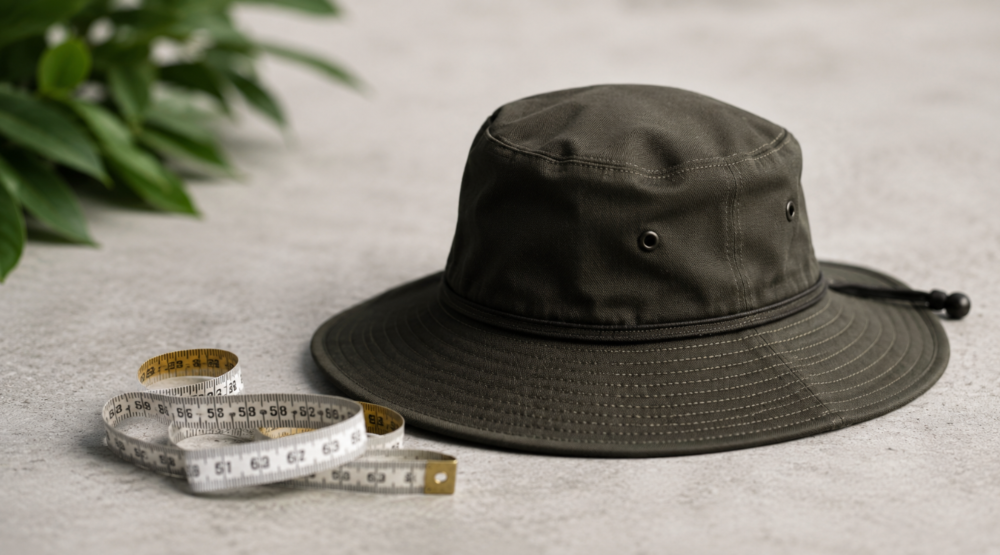
A quick head measurement takes less than a minute and gives you the best chance of choosing a hat size that feels comfortable all day.
Step 1: Grab The Right Tape
Use a soft tape measure, flexible tape measure, or sewing measuring tape. If you do not have one, use a piece of string, then place it against a ruler. Avoid metal builder’s tape because it will not sit smoothly around your head.
Step 2: Wrap It Around Your Head
Place the tape across the middle of your forehead, then wrap it around the widest part of your head. It should sit just above your ears, close to where the hat’s sweatband would rest.
-
Do not pull the tape too tight
-
Keep it level at the front and back
-
Measure in centimetres for better accuracy
Step 3: Read The Measurement
Check the number where the tape meets. This is your head circumference.
For example:
-
57 cm usually matches M or 7 1/8
-
59 cm usually matches L or 7 3/8
-
61 cm usually matches XL or 7 5/8
Step 4: Compare It With The Chart
Use the hat size chart to determine the correct size. If your head measurement falls between two sizes, choose the larger size hat for a more comfortable fit.
What If You're Between Hat Sizes?
If your head measurement sits between two sizes, choose the larger hat size first, then adjust the fit if needed.
A hat that is slightly roomy can usually be fixed. A hat that is too tight is much harder to wear, especially on hot Australian days when you need a comfortable fit for events, work, school, sport, or travel.
Why Size Up Works Best
A larger hat gives you room to create a snug fit without pressure across your forehead, temples, or ears. For example, if your head circumference is 58.5 cm, you may sit between L and XL. In that case, XL is usually the safer choice.
You can make a slightly large hat fit better by using:
-
The built-in strap on an adjustable cap
-
Foam inserts under the sweatband
-
A tighter snapback or buckle setting
-
A style with an elastic back or toggle
Adjustable Hats vs Fitted Hats
Adjustable hats are the easiest option for teams, staff uniforms, giveaways, and bulk orders because one size can fit more people. They are also useful when you want a branded hat for customers without knowing every exact head size.
Fitted hats need more accuracy. If the fitted size is wrong, there is less room to fix it. A 7 1/4 may feel perfect, while a 7 3/8 may sit too low, so always check the size chart before you shop.
Quick Rule: If comfort matters more than a sharp, locked-in fit, size up. If you want a cleaner look for a premium fitted hat, measure twice and match your exact size.
Hat Size Differences By Style
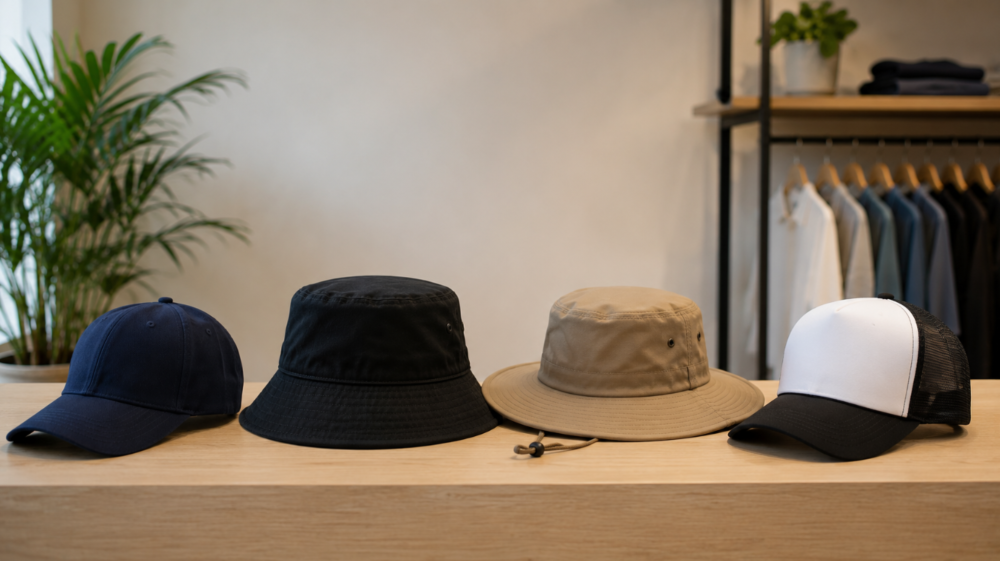
A hat size chart is a great starting point, but fit can change depending on the style you choose. Two hats with the same label can feel completely different once they're on your head.
Baseball Caps
Best for: staff uniforms, sporting clubs, schools, and promotional giveaways.
A baseball cap usually sits higher on the head and follows the natural shape of the crown. Most people find this style the easiest to wear because many designs include adjustable closures.
What to know:
-
A 58 cm head circumference often fits comfortably in a standard adult cap.
-
Structured front panels hold their shape better than soft caps.
-
Curved peaks suit most face shapes.
-
Adjustable closures help if your head measurement falls between sizes.
→ Our recommendation: Custom Baseball Caps are the safest choice when ordering for large groups because one cap can comfortably fit a wider range of people.
Bucket Hats
Best for: outdoor events, school programs, festivals, and summer promotions.
Bucket hats sit lower than caps and surround more of your head. A size that feels perfect in a baseball cap may feel slightly smaller in a bucket hat because the fit extends further down towards the ears.
What to know:
-
Bucket hats should feel relaxed, not tight.
-
Extra room improves airflow on hot days.
-
People between two sizes should usually size up.
-
A tighter fit can cause the brim to sit unevenly.
→ Our recommendation: Parkar Bucket Hat Cap offers a comfortable fit for outdoor use and gives brands a practical promotional product that people actually keep and wear.
Wide Brim Hats
Best for: construction teams, tourism operators, sporting events, and outdoor workplaces.
Wide brim hats distribute more weight around the head than other hat styles. A snug fit matters because a loose hat can move around in windy conditions.
What to know:
-
Sun-safe designs often feature wider brims of 7 cm or more.
-
Most adults wear L, XL, or Extra Large sizes in this category.
-
The sweatband plays a bigger role in comfort.
-
Accurate head circumference measurements become more important as brim width increases.
→ Our recommendation: Barbados Wide Brim Hat works particularly well for Australian conditions thanks to its large branding area and added sun protection.
Trucker Caps
Best for: trade businesses, breweries, festivals, automotive brands, and casual merchandise.
Trucker caps often feel roomier than standard caps because of the mesh back panels. That extra flexibility helps accommodate more head sizes without sacrificing comfort.
What to know:
-
Mesh panels improve airflow during warmer months.
-
Higher front panels create more space for logos.
-
Snapback closures make size adjustments quick.
-
Many adults between 57 cm and 61 cm can wear the same adjustable trucker cap.
→ Our recommendation: Custom Trucker Caps deliver some of the strongest brand visibility in the promotional market while maintaining a comfortable fit throughout the day.
Conclusion
A good hat should feel comfortable the moment you put it on. A quick head measurement and the right hat size chart can save you the frustration of buying a hat that feels too tight, too loose, or simply doesn't suit the way you wear it.
The key is accuracy. Use a soft tape measure, check your head circumference, and compare the result against a reliable size chart. Keep in mind that different hat styles fit differently, especially bucket hats, trucker caps, and wide brim designs.
If you're ordering custom hats for staff, sporting clubs, events, or promotional campaigns, adjustable styles often make the process much easier. Once you know your size, finding the perfect hat becomes surprisingly simple.
Frequently Asked Questions
What is the average hat size in Australia?
Most Australian adults fall between 57 cm and 60 cm, which usually corresponds to M, L, or XL sizing. Men often sit toward the larger end of the range, while many women fall between 55 cm and 58 cm. A quick head measurement is still the best way to find your exact fit.
Should a hat feel tight or loose?
A hat should feel secure without creating pressure around the forehead or above the ears. The ideal fit is slightly snug but not restrictive. If you notice red marks after a few minutes or feel pressure around your temples, the size is probably too small.
Can I use a string instead of a tape measure?
Yes. Wrap a piece of string around your head where the hat would normally sit, then place it against a ruler to find the measurement. For the best accuracy, keep the string level and avoid pulling it too tightly.
Why do two hats in the same size feel different?
Different materials, crown heights, brim widths, and internal sweatbands can affect fit. A trucker cap, bucket hat, and wide brim hat may all carry the same size label but sit differently on your head. This is why it's important to consider both the hat size chart and the style itself.
What is the best hat style for promotional events?
Baseball caps remain the most popular choice because they suit a wide range of people and offer excellent branding space. Trucker caps work well for casual campaigns, while bucket hats and wide brim hats are popular at outdoor Australian events where comfort and sun protection matter.